- Commercial Greenhouse
- Film Greenhouse
- PC Greenhouse
- Glass Greenhouse
- Tunnel Greenhouse
- Scientific Research Greenhouse
- Vegetable Greenhouse
- Flower Greenhouse
- Multi-span Greenhouse
- Sawtooth Greenhouse
- Greenhouse Equipments
- Greenhouse Accessories
- Hot Dip Galvanized Pipe
- Irrigation System
- Hydroponics System
- Planting Tools
- Planting technology
Tel: +86 191 5068 3942
Fax:
Mobile: +86 191 5068 3942
Contact: Alina
E-mail: sales@cngreenhouses.com
SKYPE:


UV Plastic for Greenhouse: 6 Mil Film Aging and Stabilizers
UV plastic for greenhouse film on a 64x40 m house: how ultraviolet ages a 6 mil clear cover, what stabilizers do, and the signs ageing has started.
.
TEL:+86 191 5068 3942
- Features


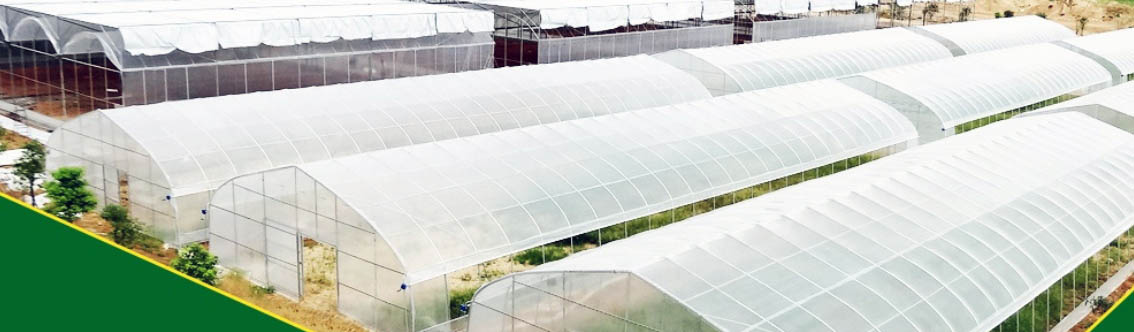
This page is about one property of the covering on this house and what happens to it once the house is in service. The film on the sheet is sold as UV resistant, with anti-ageing performance listed next to its light transmission, anti-fog and anti-dripping properties, and UV protection is one of the reasons the cover is bought. The house it is written around is a commercial single span film greenhouse at 64 m by 40 m, 2,560 square metres, covered with standard clear greenhouse film at 6 mil, about 0.15 mm, in a single or double layer on a hot dip galvanized steel pipe frame, with a wind load of 0.35 kN/m2. What follows stays with the ageing side of that list and does not drift into other subjects: what ultraviolet light does to a polyethylene sheet, what the additives in a UV stabilised film do about it, how the sunlight a site receives bears on how long a sheet stays serviceable, and the visible signs that tell a grower ageing has started while the sheet is still on the frame.
| Size | 64 m x 40 m |
| Area | 2,560 square metres |
| Type and scale | Film greenhouse, middle scale, single span |
| Cover | Standard clear greenhouse film, 6 mil (about 0.15 mm), UV resistant |
| Cover properties | High light transmittance, anti-fog and anti-dripping, anti-ageing, UV protection |
| Layer | Single or double |
| Covering material thickness | 0.15 mm or 0.12 mm |
| Film type stated | Polyethylene, held on a grooved channel frame with aluminum clips |
| Frame | Hot dip galvanized steel pipe, aluminum frames, arch roof |
| Span | 6.4 m, 8 m, 9.6 m or 10 m |
| Total structure height | 4.3 m to 6.5 m |
| Wind load | 0.35 kN/m2 |
| Ventilation | Sidewall openings with insect nets and roll-up curtains, manually or electrically operated |
| Application | Vegetable, fruit, flower, seed nursery |
Why a Polyethylene Cover Ages at All
Polyethylene is an organic polymer, and outdoors it is under attack from three things at once: ultraviolet radiation from the sun, heat, and oxygen from the air. The three work as a team rather than separately. Ultraviolet light carries enough energy to break chemical bonds in the polymer chain, and the bond it breaks most easily is the one holding hydrogen to the carbon backbone. What is left behind is a highly reactive fragment, a free radical, on the chain itself. That radical reacts immediately with the oxygen that is dissolved in the film and present on its surface, and the product of that reaction is not stable either. It breaks down further, and in breaking down it produces more radicals, which attack more chain segments.
The result is a reaction that feeds itself, and it is called photo-oxidation for that reason. Two things happen to the polymer network as it runs. Chains are cut into shorter lengths, which is chain scission, and neighbouring chains are tied to each other at new points, which is cross-linking. Both of them work against the film. Scission removes the long molecules that gave the sheet its ability to stretch under load, and cross-linking removes the ability of the chains to slide past one another, which is where ductility comes from. A film that is chemically the same thickness as the day it was installed can be brittle at the end of the process, and that is the whole story of a cover that tears instead of stretching.
Heat is the second member of the team. The reaction runs faster when the film is hotter, so a covering on a house that is closed up and hot inside during the day spends its life in conditions that accelerate what the sun started, and a covering on a well ventilated house spends it in conditions that slow the same reaction down. Oxygen is the third, and it is always there: the inside face of a film house is a moist, oxygen-bearing atmosphere, and the outside face is in open air. Beyond the three, some agricultural chemicals add to the load. Sulfur and chlorine bearing compounds used as fumigants or in some pesticide programmes are aggressive towards polyethylene and towards the stabilizer package inside it, and contact with them shortens what the additives can be asked to do.
That is the mechanism, and it explains why ageing is not a slow even fade that can be ignored until it is convenient. It is a chemical chain reaction with an induction period and then an accelerating phase, which is why a sheet that looks sound in the spring can be splitting along the clip line by the end of the same summer.
What the UV Masterbatch and Stabilizers Do
The base polyethylene resin has no defence against the reaction described above. What defends it is the additive package compounded into the film, which is normally delivered as a UV masterbatch and mixed with the resin before the sheet is extruded. This is what the words UV resistant and anti-ageing on the specification refer to: not a coating painted on afterwards, but chemistry distributed through the thickness of the film, so that the protection is present from the outer face to the inner one and is available along every cut edge as well.
Two families of additive do most of that work, and they do it in different ways. The first is the ultraviolet absorber, of which benzotriazoles are the best known example. These molecules take in ultraviolet energy and dissipate it as heat before it can reach the polymer chain, so the bond that would have broken does not break. The second family is the hindered amine light stabilizer, usually shortened to HALS. These compounds do not absorb ultraviolet light at all. They interrupt the radical chain reaction instead, mopping up the reactive fragments that the polymer produces, and the chemistry of the cycle means that a single stabilizer molecule can repeat the job many times over rather than being consumed on its first catch. In a working film the two are used together, because a screen in front of the polymer and a trap behind it are covering different parts of the same problem.
The reason this is a subject a buyer should know about is that the additive package, not the resin thickness, is the part of a covering film that is engineered for ageing. Additives are named explicitly among the things a covering film standard deals with: EN 13206, the European standard for thermoplastic covering films used in agriculture and horticulture, covers the additives such as stabilizers and UV inhibitors that are incorporated to improve a film's resistance to sunlight, temperature swings and mechanical stress, and it covers the accelerated weathering tests used to demonstrate that resistance. Two films of the same thickness can be far apart on that basis, and thickness alone is not a way to judge which one will last longer in the sun.

A related decision sits next to this one on our own sheets. The film can be supplied as a clear sheet or as a diffuse sheet, and the diffuse version is offered with OEM and ODM customisation accepted, with custom sizes made on request. Diffusion does not change the ageing chemistry: the same masterbatch question has to be answered for a diffuse film as for a clear one. What it changes is how the light that does get through is delivered to the crop. The property that ageing destroys is the same in both cases, which is why the two decisions are worth taking together when a house is specified.
Sunlight, Dose and How Long a Sheet Stays Serviceable
What ages a film is not the passage of time but the amount of ultraviolet energy that has passed through it, and that is a quantity the calendar knows nothing about. The dose a covering collects over a year depends on where the house stands and how it is used, and the differences between two sites are large enough to matter more than most specification choices. Latitude sets how high the sun climbs and therefore how much atmosphere the light crosses before it arrives. Altitude thins the atmosphere above the site, and ultraviolet levels rise with every hundred metres. Cloud, haze and dust remove part of the dose, so a clear tropical or high-altitude site delivers far more of it than a cloudy temperate one. Snow and standing water reflect ultraviolet back up at the film from below, which is why a cover on a house in a snowy district has two faces working on it rather than one. On the house itself, the roof surface takes the most direct sun through the middle of the day, while the lower side walls spend part of the day in the shadow of the roof and the frame.
Two identical sheets put on houses in two of those settings will not reach the same condition after the same number of months, and that is the reason no honest covering specification can be reduced to one number of years. The industry answers the problem by classifying rather than by dating. EN 13206 sets out a durability classification for agricultural covering films, a system of classes against which films are placed, and the exposure behind those classes is an artificial weathering test rather than a promise about a particular site. In the version of the standard that the classification comes from, the artificial exposure is run with a narrowband lamp at 340 nm at two irradiance levels, 0.35 and 0.51 W/(m·nm), with an informative correlation to natural exposure rather than a guarantee of it. For a grower the practical reading is straightforward: compare two films by their durability class and their additive package, then judge the sheet you actually own by looking at it on the house, because the site has already decided how much of the dose it is going to deliver.
This is also why the cover is worth watching on a long clear summer rather than only in the winter. A season of cloudless high-sun days delivers the dose of several dull months in a few weeks, and a film that has been in place through three such summers has taken more ultraviolet than a film that is two years older on a misty coast. Two houses in the same nursery, one under a light shade screen and one without, will not age at the same rate either.
Reading the Ageing Signs While the Sheet Is Still Up
Ageing announces itself before it fails, and the signs are visible in the normal course of walking the house. The first is a colour shift. A clear film that begins to take on a milky, straw or faintly brown cast has started to change optically, and the change is not surface dirt that will wash off. The second is a bloom on the surface, a chalky white haze that can be wiped away with a thumb but comes back, which is the polymer itself breaking down at the outer face where the ultraviolet arrives. The third sign is the one that matters most, because it is the one that predicts failure rather than appearance: loss of stretch. A sound polyethylene sheet can be deformed a long way before it tears, and a film that has been through photo-oxidation cannot.
| What you see | What it means | What to do about it |
| Milky, straw or brown cast in the sheet | Optical change in the polymer, not dirt on the surface | Wash a panel and compare it with the uncleaned film beside it; if the colour is in the film, the additive package is being consumed |
| Chalky white bloom that wipes off and returns | Breakdown at the outer face, the side that receives the ultraviolet | Treat as an early warning on the outer sheet; the inner face of the same sheet may still be sound |
| Light reading under the cover drops against a reading in the open | Transmission loss from colour and bloom, which is the property the cover was bought for | Take both readings at the same time of day and same sky; a fall here costs growth before it costs a repair |
| Splits starting along the clip line or a fixing batten | Ageing at a point where mechanical stress is also concentrated | Check tension first; a loose sheet works the film at the fixing line on every gust |
| Tears that run instead of stretching at a pinched corner | Loss of elongation, the change that ends a film's working life | Test a small pinch at a corner away from the crop; the result, not the calendar, is the evidence |
One habit turns these signs into a record rather than an impression. Note the date when the cover goes on, and once a season take a photograph of the same panel from the same position and put a light reading beside it. A grower with three seasons of that record knows exactly what this site does to a film, which is worth more than any figure a supplier could quote for a site they have never seen.
Where Ageing Shows First on This House
Ageing is not uniform across a covering, and on this model two things decide where it shows first. The first is the fixing. This house integrates a specially engineered grooved channel frame, and the sheet may only be covered by polyethylene held with aluminum clips, so the film is pinched into a groove along every line where it is held. A clip line is where the film is thinner under load, where it moves a little on every gust, and where a crack that starts has an edge to follow. In practice the first splits on an ageing cover appear along the channel rather than in the middle of a panel, which is why the fixing line is the first place to look when the colour has started to change.
The second is the roof shape and the wind. This is an arch roof, and the covering is checked for a wind load of 0.35 kN/m2. Ageing and mechanical stress are separate loads, but they meet at the points of highest pressure: the corners, the end walls and the edges of the arch, where wind pressure is greatest and where a film that has lost some of its stretch has the least margin left. A shelf of the sheet that has gone brittle at the crown or at a corner is the one that opens up in the first gale of the season, even if the panels in the middle of the house still look presentable.

The layer choice adds a third fact that is easy to get wrong. The layer on this model is single or double. A double layer holds air between two sheets, which is bought for insulation and for cutting heat loss, and it also changes the ageing picture: the outer sheet is the one facing the sky and taking the ultraviolet dose, while the inner sheet sits behind it and is protected from most of that radiation. Two sheets do not age together, and a growing house with a double layer has one sheet to watch rather than two. The inner sheet is still in the warm, moist air of the house and is still in contact with whatever is sprayed or fumigated inside, so it can become dirty or chemically marked, but the mechanism this page is about reaches it far more slowly.
What Slows the Ageing Down on Site
None of the measures below stops photo-oxidation. What they do is remove the factors that add to the ultraviolet dose or accelerate the reaction, and on a commercial house they are the difference between a cover that reaches the end of its additive package on schedule and one that fails early at a corner.
Keep the sheet properly tensioned. A film that flaps is a film that is being flexed many times a day at the clip line, and the point where photo-oxidation has taken the stretch out of the polymer is exactly the point that cannot tolerate being worked. The tensioning practice for this house, from seating the clips in the channel to checking the finished sheet, is set out step by step on our film greenhouse installation page.
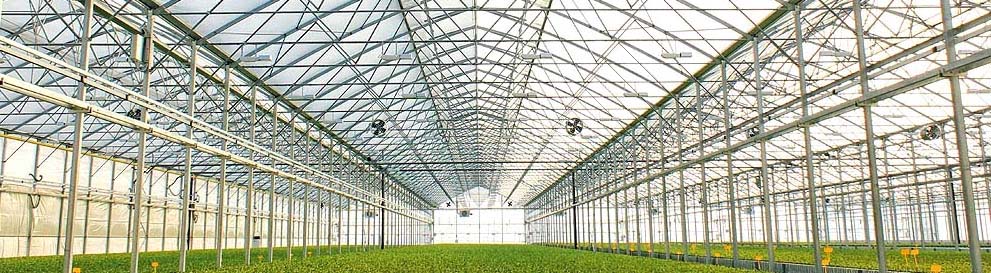
Keep the house from being cooked. Heat accelerates the same reaction, and this model is built to shed it: ventilation by sidewall openings covered by insect nets and roll-up curtains, manually or electrically operated. Opening the walls through the hottest part of the day lowers the temperature of the film itself as well as the air, and the covering is the surface that pays for a closed, hot house. Where more control is needed, the cooling system offered with the house does the same job more precisely.
Keep the strongest light off the film where the crop does not need it. A shading system is offered with this house, and shading mounted above the covering removes a share of the ultraviolet before it reaches the polymer, which is a second reason to order it on a high-dose site beyond what it does for the crop. On a house with a double layer, the trapped air is doing a related job by holding the outer sheet away from the warm inner face.
Keep aggressive chemistry off the film. Sulfur and chlorine bearing fumigants and some pesticide formulations attack polyethylene and its additives, and a house that is fumigated heavily every season will consume the protection in the sheet sooner than one that is not. Where a programme requires them, the covering is worth checking earlier in the following season rather than on the usual round.
Clean with water and a soft brush. Abrasive pads and solvent cleaners take the protective surface layer off the sheet, and every square metre scrubbed that way has had part of its additive protection removed along with the dirt. Washing is also worth doing with the transmission reading in mind, because dirt and colour change cost the crop in the same currency.
The Cover and Frame This Page Is Written Around
The house is a commercial single span agricultural plastic greenhouse built on hot dip galvanized steel pipe, and the reason given for the pipe on the sheet is a plain one: it is used to avoid rust. The covering is specified as standard clear greenhouse film at 6 mil, about 0.15 mm, in a single or double layer, with an alternative covering material thickness of 0.15 mm or 0.12 mm, and the advantages listed for the model include a span of 6.4 m, 8 m, 9.6 m or 10 m, a total structure height of 4.3 m to 6.5 m, effective prevention of heat loss and cold air intrusion, an arch roof, and a house that is suitable for all climate conditions and adaptable to any type of landscape.
One point belongs here because the two clocks on this house run on different scales, and confusing them is the usual reason a buyer is disappointed. A galvanized frame does not age by the mechanism described above at all. Zinc corrodes, and it corrodes at a rate set by the corrosivity of the air at the site, which is a different question from how much ultraviolet a sheet of film receives. The class system used for that is ISO 9223, and the figures a standard galvanized coating gives against it are these.
| Air at the site | ISO 9223 class | Time to first maintenance |
| Heavy industrial air | class C4 | about 13 years |
| Urban conditions | class C3 | about 30 years |
| Coastal conditions | class C5 | about 50 years |
| Clean suburban conditions | class C2 | 50 years or more without repair |
Those figures describe a coating rather than a pipe, and the coating is where the frame specification takes over: this house carries a specified average coating of 70 to 85 micrometres of zinc under BS EN ISO 1461, assessed against BS EN ISO 14713-1, and every cut and drilled point made during the build is treated afterwards so the coating line is not broken. Name the class of the site and the coating thickness in the enquiry, and the frame stops being a general claim and becomes a figure for that location. The film on the same house is read a different way, by looking at the sheet and judging what the sun has already taken out of it.
How the frame underneath is chosen, and what the covering options mean for the crop rather than for the film, are set out on our tunnel film greenhouse page, which covers how the polyethylene covering is chosen and how it is renewed on a tunnel house.
The film itself, and what governs how much light it passes once it is up, is the subject of its own page in the same range, and it sits next to this one in the way the two subjects interact: light transmission through a clear cover is what the film loses as it ages, and condensation on the inner face is the other thing a grower sees through the same sheet.
Systems That Can Be Added to the House
Systems are added to the order depending on the customer request, and three of the ones on the list bear directly on the lifetime of the cover rather than only on the crop. The shading system takes part of the ultraviolet dose off the film. The ventilation system moves air through the house and holds down the temperature that accelerates the reaction. The cooling and heating system keeps the house in the range the crop wants, which in a hot climate means the film is not left to sit at the temperature of a closed box.
| Shading system | Cuts the ultraviolet reaching the covering as well as the light reaching the crop |
| Ventilation system | Holds the film temperature down, which holds the ageing reaction down |
| Cooling and heating system | Keeps the volume inside the range the crop needs through the extremes |
| Irrigation system | Water planned under a cover that keeps rain out |
| Fertilization system | Feeding matched to the light the house can deliver |
| Benches | Lifts nursery work to working height under the cover |


Crops and Sites Behind a UV Resistant Cover
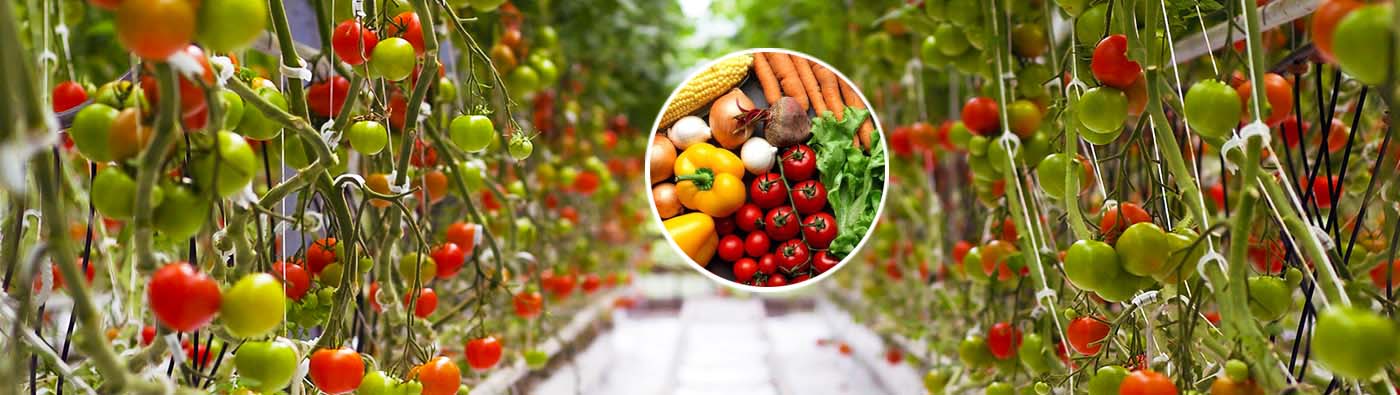
The house is used for vegetables, fruit, flowers and seed nursery work, and the crops that benefit most from a covering that holds its light transmission are the ones that are grown for the light they receive and sold on how they look. Fruiting vegetables such as tomatoes and cucumbers carry a canopy through the season and respond to what reaches the leaves, so a cover that has gone milky costs them directly in growth. Flower and nursery crops are sold on grade, and a film that has yellowed also changes the quality of the light under it in a way that shows up in colour and finish.
The sites where the ageing argument is most worth putting on a specification are the ones with the highest dose: low latitudes, high altitudes, clear-sky districts, and anywhere snow lies on the ground through the winter and reflects ultraviolet back up at the covering. Those are also the sites where a shading system or a diffuse film earns its place in the order rather than being treated as an extra. How growers in different climates plan their houses around covering performance, and how commercial protected cropping is run in practice, is reported month by month by HortWeek, and the technical side of covering films, including the durability classification described above, is the work of the NGMA and the standards bodies that maintain it.

Packing, Warranty and Support
The house travels in three groups: metal structures, covering system and install accessories. The covering system is packed as a covering rather than as a loose sheet, and the aluminium clips and channel that hold the film come with the group that installs it. A house of this size is usually ordered with a spare length of film against the day a panel is damaged by a tool or a hailstorm, and the covering can be cut to length rather than being supplied only in standard rolls.
The structure is backed by a long-term structural warranty, and the company behind it has been manufacturing greenhouses for above 35 years. We ship to customers all over the world every year. We have a professional engineer department, and if a customer requests it we can send our engineers to foreign countries to guide the installation. Many customers visit our factory each year for business cooperation, and the question they most often bring is the one this page answers: how long the film on the roof will hold up in their conditions, and what tells them it is time to look at it properly.

If you need to ask a question and get some help to find the best greenhouse for you, call us on +86 191 5068 3942 or send an e-mail to sales@cngreenhouses.com. Tell us where the house will stand, how high the site is and how many clear-sky months it gets, and whether the cover is to be clear or diffuse and single or double, and the film specification and the systems around it can be put together for that site. The rest of the polyethylene covered range is on our film greenhouse range page.

Frequently Asked Questions
Q: What does UV resistance actually mean on a 6 mil clear greenhouse film?
It means the film carries an additive package and not just the resin. Polyethylene has no natural defence against ultraviolet light, which breaks bonds in the polymer chain and starts a self-feeding reaction with oxygen. A UV resistant film has absorbers that take in ultraviolet energy before it reaches the chain, and hindered amine light stabilizers that interrupt the reactive fragments the polymer produces. The house on this page is covered with standard clear greenhouse film at 6 mil, about 0.15 mm, described as a UV resistant sheet with anti-ageing properties, high light transmittance and anti-fog and anti-dripping performance.
It means the film carries an additive package and not just the resin. Polyethylene has no natural defence against ultraviolet light, which breaks bonds in the polymer chain and starts a self-feeding reaction with oxygen. A UV resistant film has absorbers that take in ultraviolet energy before it reaches the chain, and hindered amine light stabilizers that interrupt the reactive fragments the polymer produces. The house on this page is covered with standard clear greenhouse film at 6 mil, about 0.15 mm, described as a UV resistant sheet with anti-ageing properties, high light transmittance and anti-fog and anti-dripping performance.
Q: What are the first visible signs that the film is ageing?
A milky, straw or brown cast in the sheet, and a chalky bloom that wipes off the surface and comes back. Both are signs that the reaction has begun at the outer face. The sign that matters more than appearance is loss of stretch: pinch a corner of the film away from the crop and pull it, and a sheet that tears instead of stretching has lost the elongation that lets it carry wind load. A light reading taken under the cover against a reading in the open turns all of this into a number.
A milky, straw or brown cast in the sheet, and a chalky bloom that wipes off the surface and comes back. Both are signs that the reaction has begun at the outer face. The sign that matters more than appearance is loss of stretch: pinch a corner of the film away from the crop and pull it, and a sheet that tears instead of stretching has lost the elongation that lets it carry wind load. A light reading taken under the cover against a reading in the open turns all of this into a number.
Q: Which part of this house ages first?
The fixing lines, and then the corners and end walls. This house uses a specially engineered grooved channel frame, and the film may only be covered by polyethylene held with aluminum clips, so the sheet is pinched along every channel line and worked a little on every gust. Splits on an ageing cover usually start along the channel rather than in the middle of a panel. The corners and the ends of the arch are next, because that is where wind pressure on a covering checked for 0.35 kN/m2 is greatest.
The fixing lines, and then the corners and end walls. This house uses a specially engineered grooved channel frame, and the film may only be covered by polyethylene held with aluminum clips, so the sheet is pinched along every channel line and worked a little on every gust. Splits on an ageing cover usually start along the channel rather than in the middle of a panel. The corners and the ends of the arch are next, because that is where wind pressure on a covering checked for 0.35 kN/m2 is greatest.
Q: Does the inner sheet of a double layer age as fast as the outer one?
No. On a double layer the outer sheet faces the sky and takes the ultraviolet dose, while the inner sheet sits behind it and is shielded from most of that radiation. The two sheets do not age together. The inner sheet still lives in the warm, moist air of the house and still meets whatever is fumigated or sprayed inside, so it can become soiled or chemically marked, but the ageing mechanism described here reaches it much more slowly.
No. On a double layer the outer sheet faces the sky and takes the ultraviolet dose, while the inner sheet sits behind it and is shielded from most of that radiation. The two sheets do not age together. The inner sheet still lives in the warm, moist air of the house and still meets whatever is fumigated or sprayed inside, so it can become soiled or chemically marked, but the ageing mechanism described here reaches it much more slowly.
Q: How can two films be compared if neither one quotes a number of years?
By durability class and by additive package. The dose a film receives depends on latitude, altitude, cloud, reflection from snow and water, and how the house is run, so a single number of years could not be true for two sites at once. EN 13206, the European standard for thermoplastic covering films in agriculture and horticulture, handles this by classifying films into durability classes and by naming the additives such as stabilizers and UV inhibitors that the classification depends on, with the classes tied to an artificial weathering exposure rather than to a site. Thickness on its own says very little about which sheet will last longer in the sun.
By durability class and by additive package. The dose a film receives depends on latitude, altitude, cloud, reflection from snow and water, and how the house is run, so a single number of years could not be true for two sites at once. EN 13206, the European standard for thermoplastic covering films in agriculture and horticulture, handles this by classifying films into durability classes and by naming the additives such as stabilizers and UV inhibitors that the classification depends on, with the classes tied to an artificial weathering exposure rather than to a site. Thickness on its own says very little about which sheet will last longer in the sun.
Q: What can I do on site to slow the ageing down?
Four things. Keep the sheet properly tensioned so it is not flexed at the clip line on every gust, which is the practice set out on our film greenhouse installation page. Keep the house ventilated with the sidewall nets and roll-up curtains so the film is not held at a temperature that accelerates the reaction. Order a shading system on a high-dose site, because shading above the covering removes part of the ultraviolet before it reaches the polymer. And keep sulfur or chlorine bearing fumigants and abrasive cleaning off the sheet, since both take protection out of the film. None of them stops photo-oxidation, and all of them change when it matters.
Four things. Keep the sheet properly tensioned so it is not flexed at the clip line on every gust, which is the practice set out on our film greenhouse installation page. Keep the house ventilated with the sidewall nets and roll-up curtains so the film is not held at a temperature that accelerates the reaction. Order a shading system on a high-dose site, because shading above the covering removes part of the ultraviolet before it reaches the polymer. And keep sulfur or chlorine bearing fumigants and abrasive cleaning off the sheet, since both take protection out of the film. None of them stops photo-oxidation, and all of them change when it matters.
Note: If you're interested in the product, please submit your requirements and contacts and then we will contact you in two days. We promise that all your informations won't be leaked to anyone.
 Deutsch
 Español
 Français
 Italiano
 Português
 日本の
 한국어
 العربية
 български
 hrvatski
 česky
 Dansk
 Nederlands
 suomi
 Ελληνικά
 हिन्दी
 norsk
 Polski
 Română
 русский
 Svenska